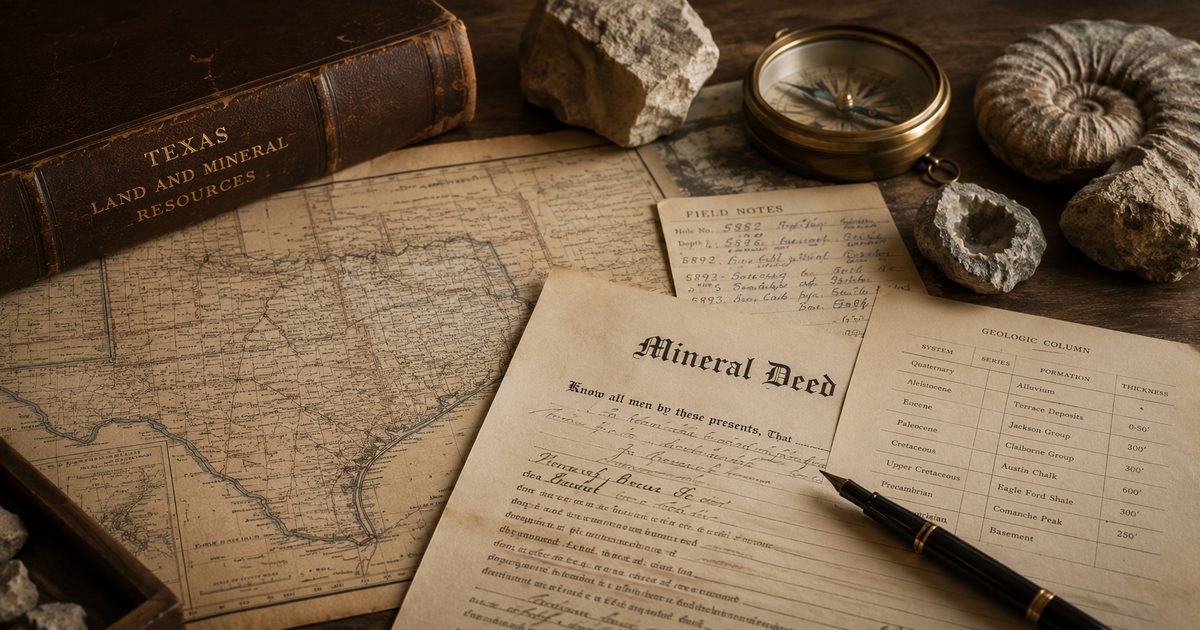
Blanco County's Mineral Profile
Blanco County is part of the Texas Hill Country, which sits on the Edwards Plateau — a limestone uplift that is not associated with the major hydrocarbon-producing formations that have driven Texas oil and gas production. The county does not appear prominently in Railroad Commission production data, and there are no major active oil fields within the county boundary.
This is meaningfully different from buying land in Midland County (Permian Basin), LaSalle County (Eagle Ford), or Webb County (natural gas plays), where active mineral development is a near-certain reality for any property owner. In Blanco County, the practical risk of a mineral owner exercising surface access rights for drilling is low.
Why Mineral Status Still Matters
Low development risk is not the same as zero development risk. Several reasons to understand mineral status even in lower-activity counties:
You may not be buying what you think you are buying
In Texas, land is commonly listed and marketed without specifying whether minerals are included. A buyer who assumes they are acquiring the full bundle of property rights — surface, minerals, water — may be surprised after closing to learn that the mineral estate was severed 80 years ago. This does not necessarily affect the practical enjoyment of the property, but it affects what you actually own.
Mineral interests have value
Even in lower-activity areas, intact mineral interests have value — both intrinsic (the potential for future production) and market value if you ever chose to lease or sell them. A seller who retains minerals is retaining something of value, and a buyer who knowingly acquires land with minerals included is acquiring more than one who does not.
Energy economics shift
What is uneconomic to drill today may be very economic in 20 years. New geological formations are identified, extraction technology improves, and commodity prices change. Blanco County has not been a historically active producing county, but that does not permanently foreclose future interest. A buyer thinking about long-term ownership should consider what mineral status means over a 20–30 year time horizon, not just today's oil price.
What to Verify Before You Close
- Review Schedule B of your title commitment for mineral severance exceptions
- Ask the seller directly whether minerals are included in the purchase and get that representation in writing
- If minerals are severed, ask whether there are any active or recently expired mineral leases
- Check the Railroad Commission for any permitted wells or production associated with the property