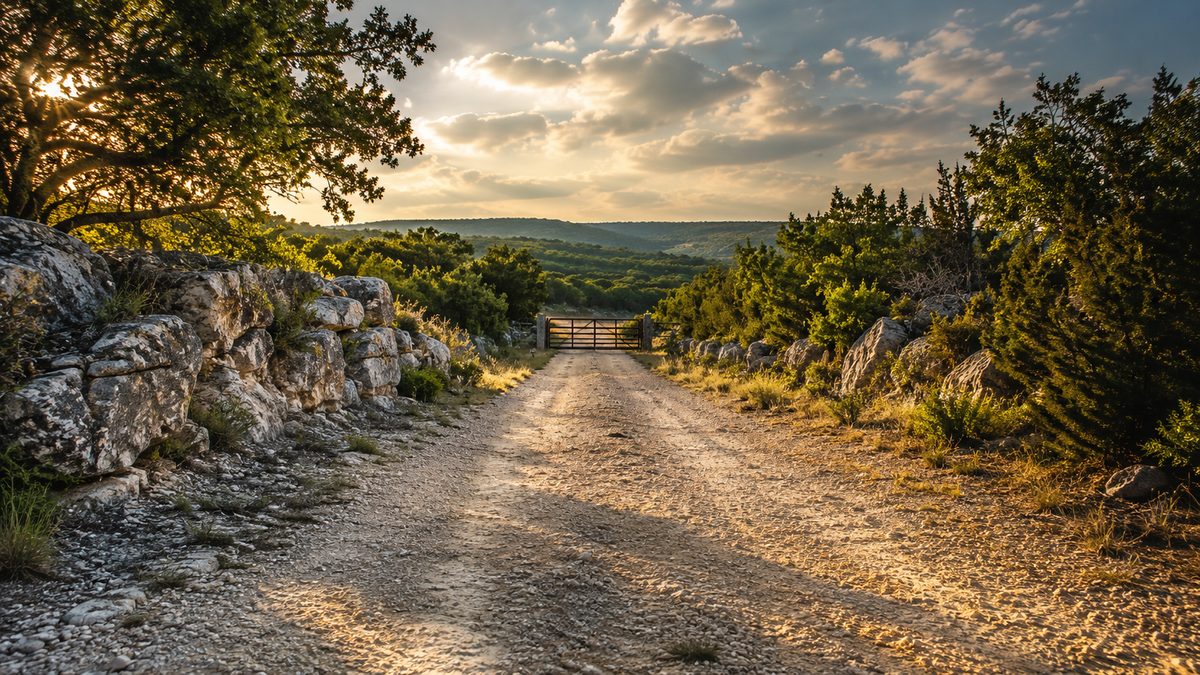
Access to Your Land Is Not Automatic
It sounds obvious — of course you can get to the land you're buying. But in rural Texas, legal access to a property is not guaranteed, and more buyers discover this problem after closing than before. A tract of land without deeded access to a public road is legally landlocked. Fixing that situation after the fact can be costly, slow, and in some cases impossible.
Road access is one of the first things Joe verifies on any property he works with a buyer on — and it's one of the questions that can determine whether a deal is worth pursuing at all.
What Deeded Access Means
Deeded access means the property's legal description or title documents include a recorded right to use a specific road or route to reach the property from a public road. This right travels with the land — it survives the sale and is enforceable against whoever owns the road in the future.
Common forms of deeded access include:
- Access easement recorded in the deed — the most straightforward form. The deed creating the property grants a specific easement over a neighboring parcel, described by metes and bounds or general reference to an existing road.
- Easement recorded in a separate instrument — a standalone easement agreement, recorded in the county deed records, granting a right of passage. Should appear in the title commitment's Schedule B exceptions.
- Fee ownership of a road strip — in some cases, the property itself includes a narrow strip of land connecting to a public road, giving the owner direct ownership rather than an easement right.
None of these are visible on a drive-by. They exist — or don't — in the recorded instruments that make up the chain of title. The title commitment will tell you what's actually there.
Easements: What You're Really Getting
An easement is a legal right to use someone else's land for a specific purpose. Access easements are the most common type in rural real estate, but not all easements are created equal. Before closing on a property where access depends on an easement, understand exactly what the easement provides:
- Width — how wide is the easement? A 20-foot easement allows a standard road. A 15-foot easement may be tight for trucks and trailers. Width matters for practical use.
- Surface type — is there an obligation for the easement grantor or holder to maintain the road? Most private easements are silent on maintenance, which means it defaults to the easement holder.
- Shared use — does the easement serve multiple parcels? Shared access easements distribute maintenance responsibility and can create disputes over road upkeep costs.
- Termination conditions — some easements terminate under specific conditions. Read the instrument carefully.
- Scope — an easement "for agricultural purposes" may not include commercial vehicle access. Understand whether the easement covers your intended use.
Prescriptive Easements: The Exception You Can't Rely On
Texas recognizes prescriptive easements — easement rights acquired through open, continuous, hostile, and adverse use over a period of time (generally 10 years under the Texas statute of limitations). In plain terms: if a road has been openly used without the landowner's objection for a decade or more, a court may recognize a prescriptive easement even if nothing is recorded.
The problem is that prescriptive easements are unrecorded, legally uncertain, and can be extinguished if the landowner fences the road or grants permission (turning hostile use into permissive use). They are not a reliable substitute for recorded, deeded access.
If a seller or agent points to a long-used road as the access and it isn't in the title, treat that as a red flag, not a reassurance.
Landlocked Tracts: What Happens and What It Costs
If a property is landlocked — no deeded access to a public road — the buyer has limited options:
- Negotiate an easement — purchase an access easement from an adjacent landowner. Price is whatever the market bears; the neighboring owner has all the leverage.
- Statutory private road — Texas law (Chapter 251, Transportation Code) allows a landlocked landowner to petition a county commissioners court for a private road across neighboring land, subject to compensation. This process is slow, expensive, and contested.
- Abandon the purchase — in most cases, if access can't be confirmed and the seller can't cure it, walking away is the right answer.
Private Roads: Maintenance and Reality
Many rural properties in Blanco County are accessed via private roads — caliche or gravel roads that serve one or more properties and are not maintained by the county. This is normal and not inherently problematic, but buyers need to understand a few things:
- Private road maintenance is the responsibility of the landowners who use it, not the county. There is often no formal maintenance agreement, which means it defaults to whoever cares enough to grade it.
- Road quality degrades after heavy rain, especially on limestone terrain. A road that's passable in summer may require a truck with clearance after a wet winter.
- If the road is shared, ask who has historically maintained it and what, if any, cost-sharing arrangement exists with neighboring properties.
- Confirm that the easement width is sufficient for the equipment you plan to use — cattle trucks, hay equipment, construction vehicles.
What to Verify Before You Close
Joe walks through the following on every land transaction:
- Request the title commitment early — review Schedule B for access easements and road-related exceptions
- Ask the title company to confirm that the property has recorded, deeded access to a public road
- Walk the actual access road, not just the property — assess surface condition, width, and any potential obstruction points
- If multiple parties share the access, identify all users and ask about any existing road maintenance agreements
- Have your attorney review any easement language before closing if anything is unclear