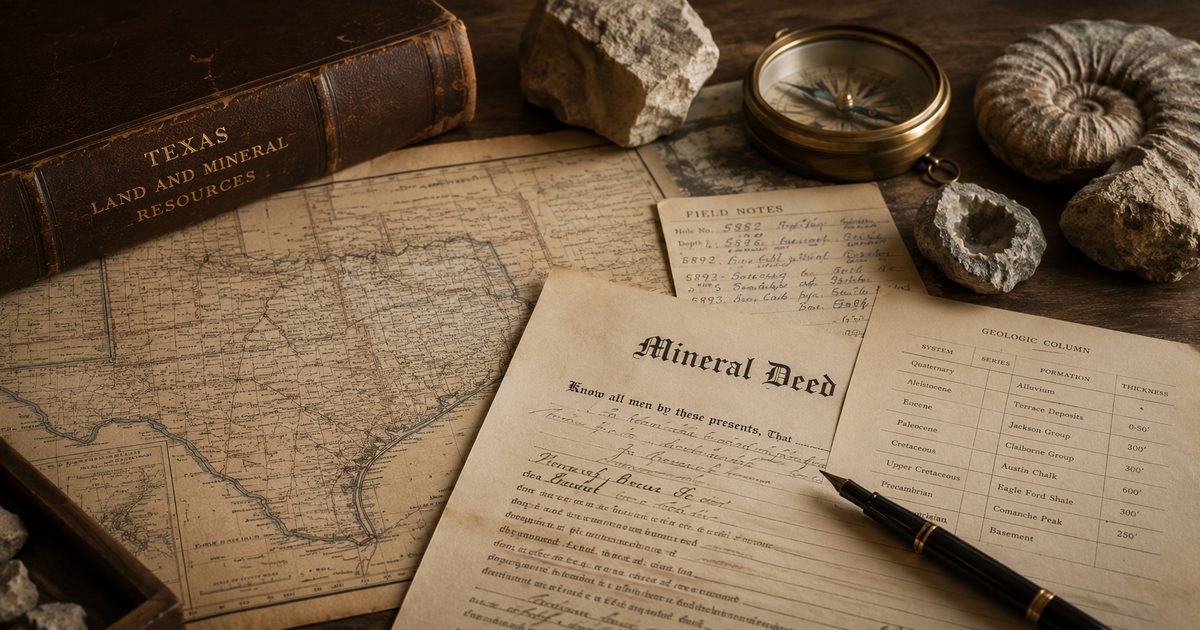
The Chain of Title
In Texas, mineral ownership is public record. Every transfer of mineral interests — whether severed from the surface, conveyed separately, or reserved in a deed — should appear in the recorded deed history at the county courthouse. Tracing that history from the current owner back through prior owners is called examining the chain of title, and it is the authoritative method for determining who owns the minerals under any given parcel.
For most routine land purchases in Blanco County, your title company will identify obvious mineral severances as part of producing the title commitment. These appear in Schedule B as exceptions to coverage. If the minerals were severed long ago and no subsequent deeds reconveyed them to the surface owner, the title commitment will reflect that the minerals are not included in the transaction.
Where to Look
Blanco County Clerk's office
The Blanco County Clerk maintains recorded deeds, deeds of trust, mineral conveyances, and oil and gas leases. Records can be searched by grantor/grantee name or by legal description. For properties where the mineral history is complex or where the land has been in multiple ownerships, a search at the courthouse is the starting point.
Texas Railroad Commission
The Railroad Commission of Texas (RRC) regulates the oil and gas industry and maintains records of wells, permits, and production data. If you want to know whether there has been any active oil and gas activity on or near a property — wells drilled, permits issued, production recorded — the RRC's public GIS and well search tools are the primary resource. The absence of RRC records on a property does not mean minerals are intact, but active RRC records tell you the minerals are at minimum leased and potentially in production.
Title company and landman
For most residential-scale rural land purchases (under 200 acres), the title company's review is sufficient to flag obvious severances. For larger ranches, properties with complex deed histories, or situations where the buyer specifically wants to acquire minerals, hiring a licensed landman — a professional who specializes in mineral title research — is worthwhile. A basic mineral title examination typically costs $500–$2,000 depending on complexity.
What "Severed" Actually Means
A mineral severance means the mineral estate has at some point been separated from the surface estate by deed. The surface and mineral estates can then be owned by completely different parties, conveyed separately, leased separately, and taxed separately. In Texas, many Hill Country properties have had minerals severed for 50–100 years or more, often going back to early 20th-century timber or railroad land grants.
Finding that minerals are severed does not mean there is active production or imminent drilling. In Blanco County specifically, the risk of active oil and gas development is substantially lower than in the Permian Basin or Eagle Ford play areas. But "severed minerals" does mean that a mineral owner or their lessee has the legal right to access the surface for development purposes — a right that continues regardless of who owns the surface.