The Wildlife Management Valuation
Wildlife management special valuation — available under Texas Property Tax Code Section 23.51(2) — allows landowners to maintain agricultural-rate property taxes while managing their land for native wildlife rather than traditional livestock or crop production. It was created by a 1995 constitutional amendment and has become increasingly popular in the Hill Country as landowners have shifted from cattle operations to wildlife-focused management.
In Blanco County, where white-tailed deer populations are substantial and hunting lease income is a significant economic activity, wildlife management valuation is a natural fit for many properties. It allows landowners who want to optimize their land for deer, turkey, and other native species to do so while maintaining the low tax position that agricultural valuation provides.
The Prerequisites
The most important limitation on wildlife management valuation is that it is not available as a standalone classification for land at market value. To qualify, the land must have been under agricultural special valuation in the year immediately preceding the year you are applying for wildlife management valuation. This means:
- If you purchase a property under ag valuation, you can apply to convert it to wildlife management valuation as your qualifying use
- If you purchase a property at market value (no prior ag valuation), you cannot go directly to wildlife management valuation — you must first establish agricultural use, hold it for five of seven years, and then convert
- If an existing ag valuation lapses (rollback is triggered), you lose the ability to convert to wildlife management without re-establishing agricultural use first
What Wildlife Management Activities Qualify
Texas Parks & Wildlife Department specifies seven categories of qualifying wildlife management activities. A landowner must conduct at least three of the seven to qualify:
- Habitat control — brush management, prescribed burning, native grass restoration
- Erosion control — grass and brush planting on disturbed areas
- Predator management — trapping, hunting, or removing predators that affect native wildlife
- Providing supplemental water — water features, wildlife-specific water sources
- Providing supplemental food — food plots, feeders (subject to local limitations)
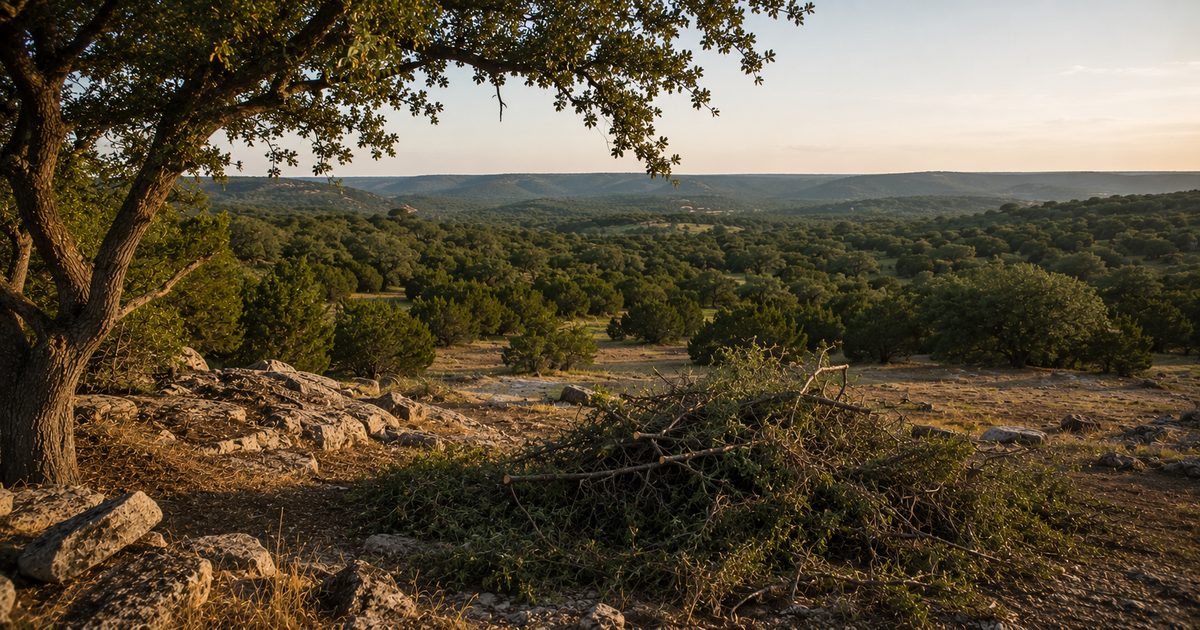
- Providing shelters — brush piles, nesting boxes, bat houses
- Making census counts — wildlife population surveys, camera trap monitoring
The Application Process
The conversion application uses the same Form 50-129 (Application for 1-d-1 Open-Space Agricultural Use Appraisal) but with the wildlife management use designation. The applicant must also submit a wildlife management plan that describes the property, identifies the target wildlife species, and specifies the qualifying management activities to be conducted each year.
TPWD provides technical assistance and guidance for developing a qualifying plan. Many Blanco County landowners work with a wildlife biologist to develop their initial plan. Once approved, annual records of management activities must be maintained to support continued qualification.