
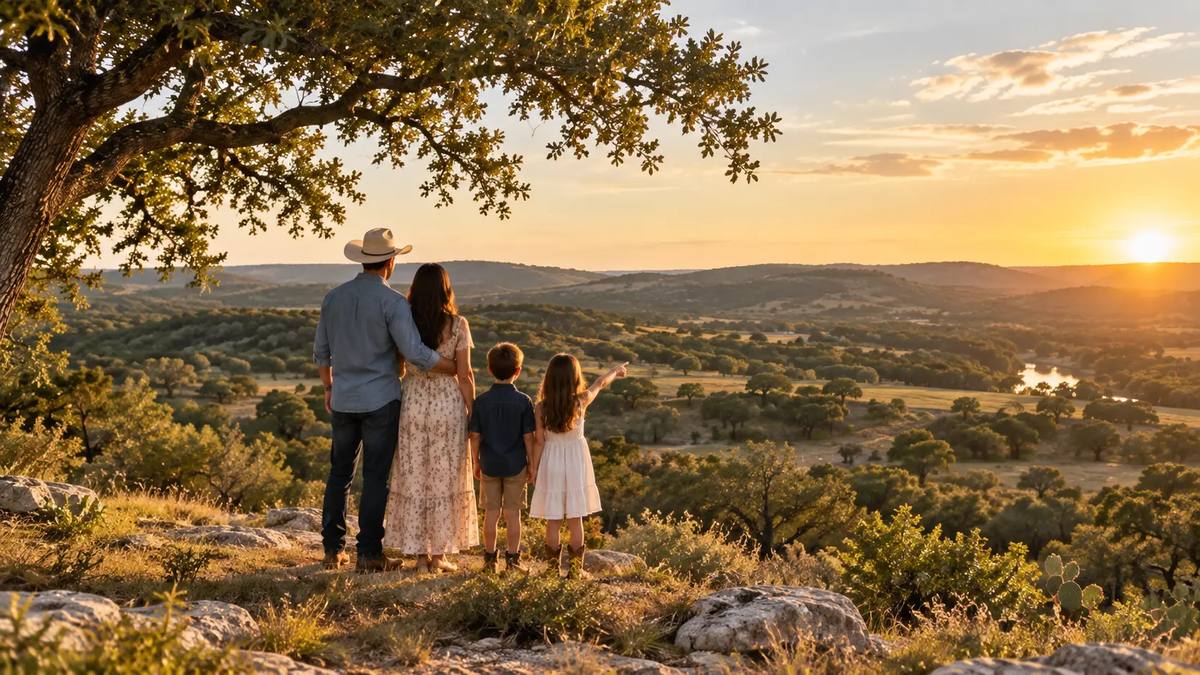
Why People Are Relocating to the Hill Country
The pull is fairly consistent across the buyers Joe works with: more land and privacy than an in-town lot can offer, a slower pace of life, and enough proximity to Austin or San Antonio to stay connected to work, family, or medical care without living in the middle of either city. Remote and hybrid work arrangements have made this tradeoff realistic for a wider range of buyers than it used to be — you don't have to be retired or self-employed to make the math work anymore.
It's also worth being honest about the region's growth pattern. Counties closer to the Austin and San Antonio metro edges — Hays, Comal, and Kendall — have grown quickly over the past decade as those cities expand outward. Blanco County itself has grown more slowly, largely because of its distance from major job centers, which is part of why it still feels distinctly rural rather than suburban. If a quieter, more remote character is part of the appeal, that's a real and durable feature of the area, not a temporary window before it fills in.
How Far Is It, Really? Commute Times to Austin and San Antonio
Drive times vary meaningfully depending on exactly where a property sits and which direction you're headed:
- Johnson City to downtown Austin: roughly 45-55 minutes under normal traffic
- Blanco to San Antonio: roughly 50-70 minutes
- Fredericksburg to San Antonio: roughly 70-80 minutes
- Fredericksburg to Austin: roughly 80-90 minutes
Properties near Highway 290 or closer to Interstate 10 tend to have the most predictable commute times. Land deeper into the county on county roads can add real time, especially if any portion of the route isn't paved. If a commute is part of your calculation, drive the actual route at the time of day you'd realistically be making it — a Sunday-afternoon showing tells you very little about a Monday-morning commute.
Choosing Where to Land: Blanco County vs. Gillespie County
Both counties offer the same broad Hill Country character — rolling terrain, cedar and live oak cover, and a mix of working ranches and recreational tracts — but they have real differences in feel and proximity. Blanco County sits closer to Austin, with Johnson City, Blanco, Round Mountain, Cypress Mill, and Twin Sisters offering a range of small-town and more remote options. Gillespie County, anchored by Fredericksburg, leans more toward San Antonio and carries a stronger wine-country and tourism character in and around town, with quieter surrounding areas in Stonewall, Harper, Willow City, and Doss. See the full Blanco County guide and Gillespie County guide for a closer look at each area.
What Daily Life Looks Like on Hill Country Land
This is the section most relocation guides skip, and it's the one that matters most for a smooth transition. Most rural Hill Country properties are not connected to municipal water or sewer — you'll be on a private well and a septic system, both of which require basic ongoing awareness rather than a monthly utility bill you don't think about. Grocery runs, errands, and even some deliveries take more planning than they do in a city, since the nearest full grocery store may be 20-30 minutes away depending on the property. Fire protection in most of the unincorporated county comes from volunteer fire departments rather than a full-time municipal department, which is worth knowing for both safety planning and homeowners insurance.
None of this is presented to discourage a move — most people who relocate here adjust quickly and come to prefer it. But it's a genuinely different rhythm than city or even close-in suburban living, and it's worth experiencing before you commit rather than discovering after closing.
Schools, Healthcare, and Everyday Services
Blanco and Gillespie County are served by several independent school districts, including Johnson City ISD, Blanco ISD, and Fredericksburg ISD, each with its own campus locations and boundaries — worth checking specifically for any property under serious consideration. Healthcare ranges from local clinics to hospitals in Fredericksburg and Marble Falls, with more extensive specialist care available in Austin or San Antonio for anyone who needs it regularly. If schools or proximity to specific medical care are priorities, research the exact district and nearest facility for a property before making an offer, since these can vary meaningfully even within the same county.
What Surprises Most Newcomers
A few things come up again and again with buyers relocating from a city:
- Ag and wildlife exemptions — many properties carry one, and it affects property taxes and requires maintaining a qualifying use. See Ag Exemptions in Blanco County.
- Private water wells — most rural properties rely on a well rather than city water, with yield and quality varying property to property. See Water Wells in the Hill Country.
- Due diligence depth — buying rural land involves more verification than buying a house with a standard inspection. See the Complete Due Diligence Checklist.
- Financing timelines — rural land loans can move slower than a conventional mortgage. See Financing Ranch Land in Texas.
How to Start Your Search the Right Way
The most efficient starting point is narrowing down which town or area actually fits your commute and lifestyle needs, then working with a local agent who can walk through the real tradeoffs between specific properties — water, access, exemption status, and terrain all vary enough that a general online search rarely surfaces the right fit on its own. See the full Buying Land & Ranches guide for the complete process from search to closing.