What the Market Actually Shows
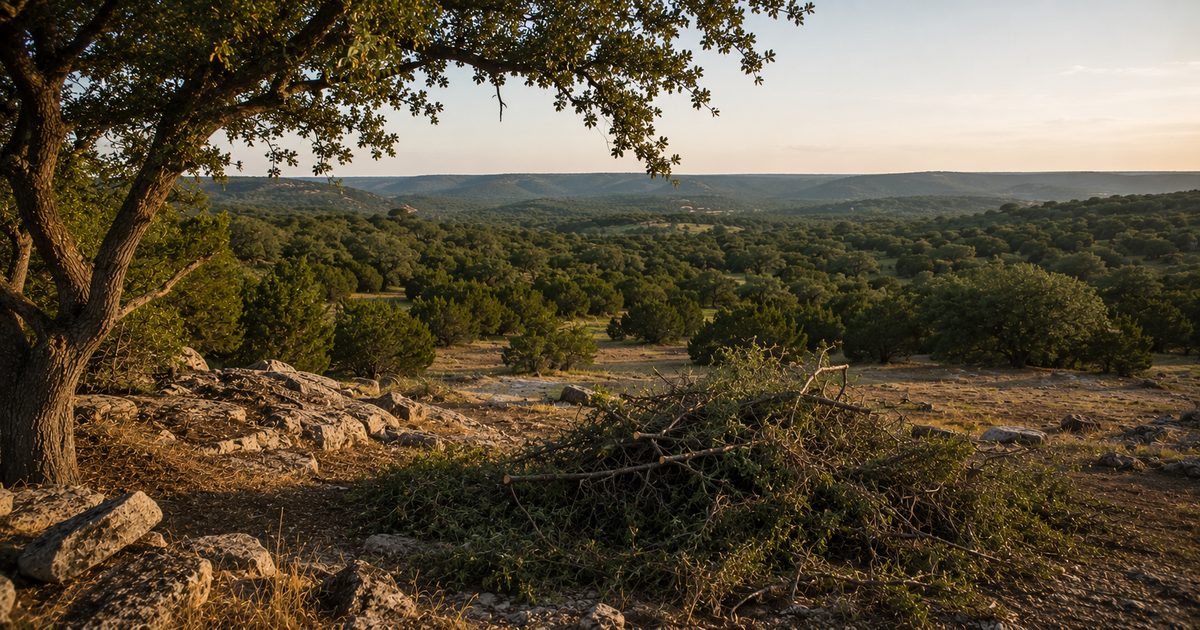
Cleared Hill Country land consistently sells at higher per-acre prices than comparable cedared tracts, when all else is equal. This is not an opinion — it reflects what buyers are willing to pay for land they can use immediately versus land that requires significant capital and time investment before it becomes productive. The premium varies by property and market conditions, but the direction is consistent.
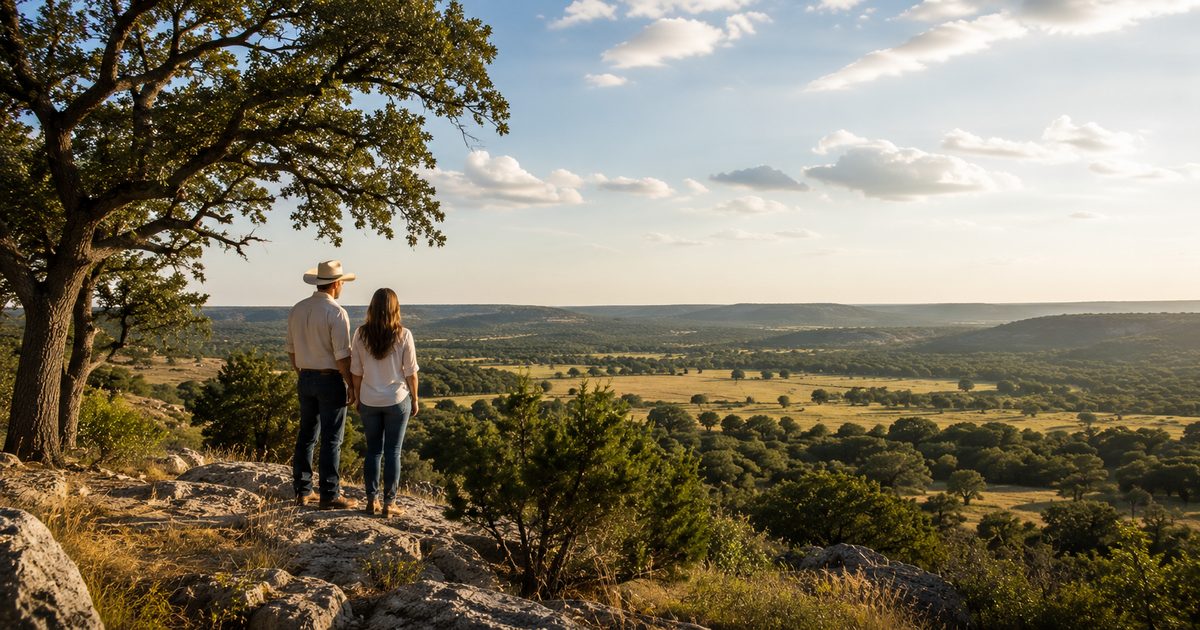
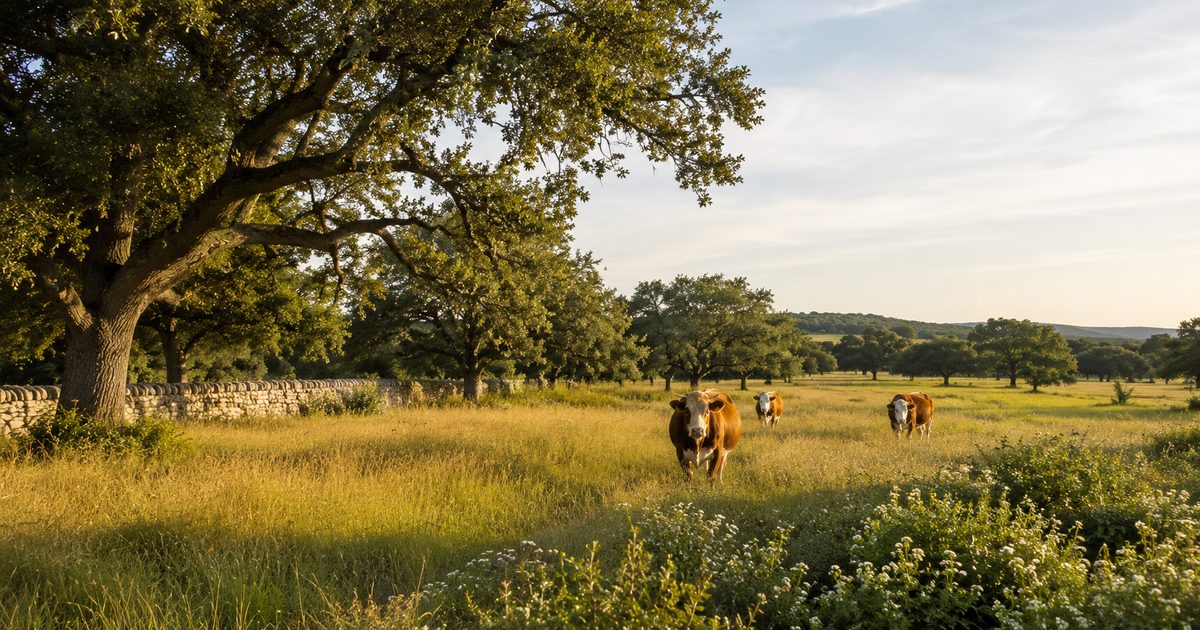
The reasons are straightforward. Cleared land supports more livestock per acre — often three to four times the carrying capacity of a comparable cedared tract. It retains surface water more effectively because Ashe juniper is a high-consumption water user that can meaningfully reduce spring output and surface moisture. And it is visually appealing in the way that most Hill Country buyers are looking for: open grassland with scattered live oaks, not a wall of cedar.
The Case for Cedared Land
The same logic that makes cleared land more valuable also creates a buying opportunity in cedared properties — if the discount is large enough. A buyer who purchases a heavily cedared tract at $300/acre below the cleared comparable, then clears it for $350/acre, has created negative equity in the short term. But a buyer who purchases at $600/acre below comparable cleared land, clears for $350/acre, and sees the land appraise at cleared values has created $250/acre in equity — on potentially hundreds of acres.
The math works when the discount is real and the clearing cost estimate is accurate. It does not work when buyers overestimate the discount or underestimate what clearing actually costs. Joe helps buyers run this calculation specifically, not generally, before they make an offer.
The Role of Partial Cedar Cover
Not all cedar is a liability. Many of the most sought-after Hill Country tracts have some cedar — as screening along property boundaries, in creek bottoms as riparian habitat, or in scattered mottes that provide shade and wildlife cover. A property with no cedar at all can feel exposed and lacks the layered habitat structure that supports strong whitetail populations.
The properties that often command the highest values are those where prior owners managed cedar strategically: open grassland pastures with cedar cleared, creek corridors left natural, boundary screening maintained, and some interior mottes left for wildlife. This takes years of thoughtful management to achieve and is reflected in price when it exists.
What Buyers Should Evaluate
When evaluating a cedared property's value potential, consider:
- Actual clearing cost — get bids, not estimates from comparable sales elsewhere
- Grass establishment timeline — cleared land does not immediately become productive pasture; native grass recovery takes 2–4 seasons depending on conditions
- Carrying capacity improvement — how many more animal units per acre after clearing?
- Water impact — does the property have springs, seeps, or creek flow that may improve after cedar removal?
- Habitat value — is the cedar providing wildlife screening or habitat that has its own value?