Why Clearing Costs Vary So Much
Cedar clearing quotes on Hill Country properties can range from $200 to over $700 per acre on the same day from different contractors. The variation is real — it reflects genuine differences in what is being cleared, how, and by whom. Understanding what drives cost helps buyers evaluate cedared properties accurately and avoid expensive surprises.
Cedar density
Cedar density is the primary cost driver. A pasture with scattered juniper and open grassland between trees clears quickly. A cedar brake — where Ashe juniper is the dominant species with a closed canopy and no understory — takes far longer per acre. Most experienced contractors tier their pricing by density category: light, moderate, and heavy. A quote based on a visual walk of the property can differ significantly from the final invoice once actual coverage is measured.
Terrain and equipment access
A flat limestone plateau with good road access clears at maximum machine efficiency. Properties with significant slope, exposed rock outcroppings, creek drainages, or dense brush that limits equipment maneuverability add time and reduce acres processed per day. A reasonable rule of thumb: add 20–40% to your base estimate for terrain that requires frequent repositioning or limits machine speed.
Clearing Methods and Typical Costs
Skid steer with mulching head — $200–$450/acre
This is the workhorse of Hill Country cedar management. A tracked skid steer equipped with a heavy mulching head can process 2–5 acres per day on moderate density, moderate terrain. The mulching head grinds cedar into chips in place, which decompose and add organic matter to the soil. No slash piles to deal with. This method works well on accessible ground with cedar under about 8 inches diameter at the base.
Chainsaw crews — $400–$700+/acre
Manual clearing by experienced crews is slower and more expensive per acre than mechanical methods, but necessary in several situations: rocky terrain where equipment cannot safely operate, selective clearing where specific trees must be spared (specimen oaks, riparian vegetation), areas with significant wildlife habitat concerns, and anywhere near fences, structures, or improvements where a mulching head would cause damage. Crew rates vary with experience and market conditions.
Bulldozer or root plow — $400–$700+/acre
Root plowing disrupts the cedar root system more thoroughly than surface cutting or mulching and is typically used when a buyer wants to establish improved pasture grasses after clearing. The machine pushes the root zone, leaving the soil disturbed and ready for reseeding. It is more expensive than mulching, leaves the ground more vulnerable to erosion initially, and is not the right tool for selective or partial clearing. Most Blanco County buyers buying for the long-term land value — not commercial agriculture — do not need to root plow.
Prescribed burn — minimal direct cost
Prescribed burning is not a standalone clearing method for established cedar stands, but it is one of the most cost-effective tools for managing regrowth on already-cleared land. A well-timed burn can knock back cedar resprouts, reduce competing brush, and encourage native grasses. The Texas A&M Forest Service provides landowner assistance for burn planning at low or no cost. The burn itself is largely a labor and logistics expense rather than a contractor expense.
Getting Accurate Bids
The only reliable way to budget clearing on a specific property is to have contractors walk the land. A minimum of two bids — three is better — is standard practice before committing capital to a clearing plan. When evaluating bids, clarify:
- Does the quote cover the entire property or only specified areas?
- What happens at fence lines and around structures?
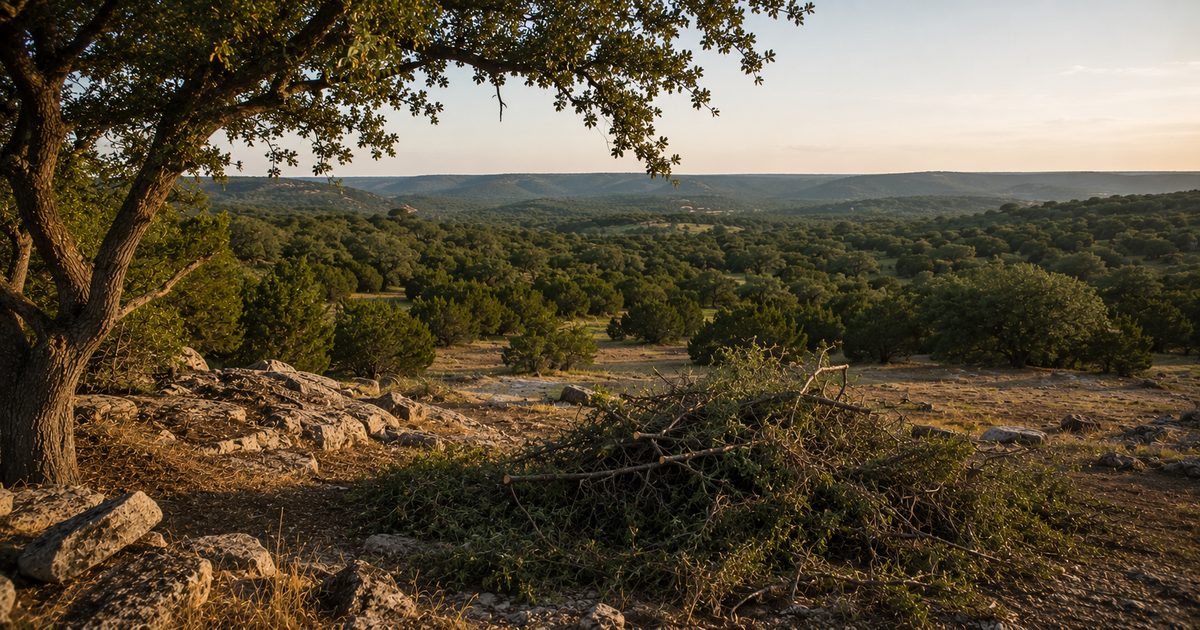
- Is slash disposal included, or does the contractor leave brush piles?
- What size cedar is included — all cedar, or cedar above a certain diameter?
A lower per-acre number that excludes fence-line work or leaves piles may not be the better deal when you account for total cleanup cost.
How to Factor Clearing Into Your Offer
The practical approach: get two contractor bids before making an offer, add 15–20% as a contingency for surprises, and deduct the full expected clearing cost from what you would otherwise pay for cleared comparable land. If the math still pencils, cedared land can represent real opportunity — especially for buyers with a longer time horizon who plan to phase the clearing over several years.