What Happens at Closing
When a Blanco County property with agricultural special valuation changes hands, the valuation does not follow the land to the new owner by operation of law. The appraisal district ties the valuation to the owner's application and qualifying use, not to the property itself as an inherent characteristic. When you close on a property, you begin a new ownership relationship with the appraisal district — and you need to establish your own qualifying status.
For the tax year in which you close, you will pay taxes at whatever rate and valuation the seller had in place for that year, prorated to the closing date. This is typically handled through tax prorations in the closing statement. The following tax year is where your own application status matters.
The Application Timeline
If you close before April 30 of a given year, you should file your own agricultural special valuation application with the Blanco County Appraisal District before that deadline to secure agricultural valuation for the current year. If you close after April 30, you will not have agricultural valuation for the current year — you will need to apply by April 30 of the following year to establish it going forward.
This timing gap is why many buyers who purchase after April 30 face a one-time tax year at market value rates — a tax bill that can be substantially higher than what they expected based on the prior owner's low tax history. Understanding this before closing allows buyers to budget for it rather than being surprised.
Maintaining Qualifying Use
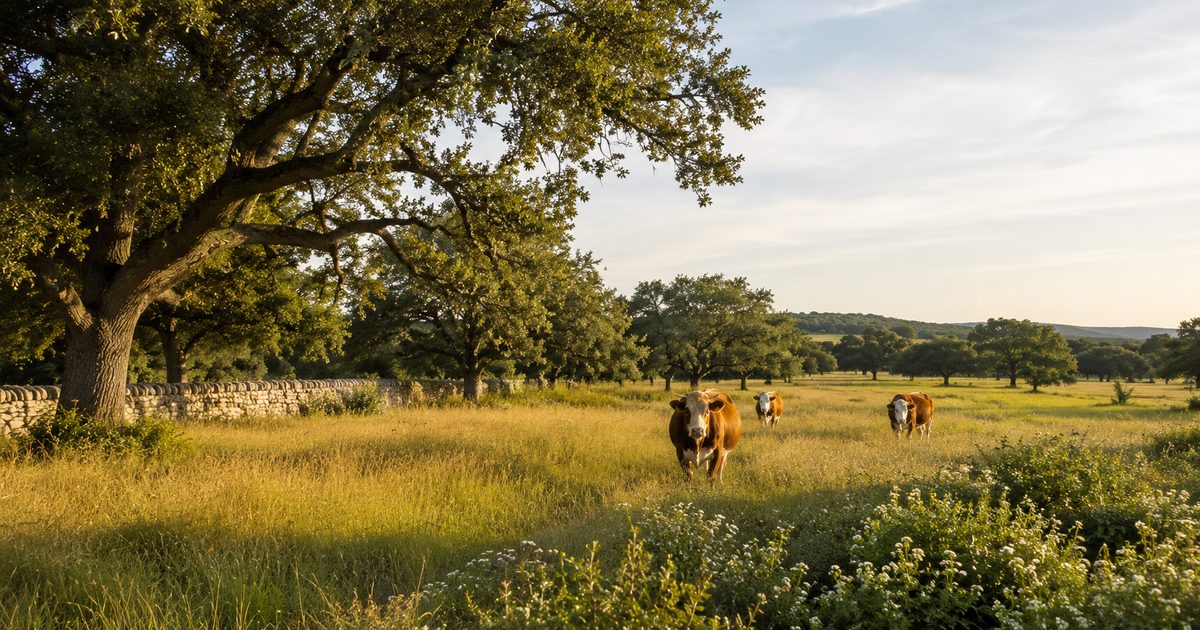
The most important thing a new owner can do to support their agricultural valuation application is to maintain the qualifying agricultural use that was in place before closing. If the prior owner ran cattle under an agricultural lease, keeping that lease in place through the application period demonstrates continuity of use. If the prior owner personally farmed hay or ran livestock, continuing that activity is important.
Disrupting the agricultural use immediately after closing — fencing off pastures, removing cattle, letting the lease expire — creates risk that the appraisal district will view the use as discontinued and deny the application.
What If You Have Your Own Agricultural Plan?
If your intended use differs from the prior owner's (for example, the prior owner ran cattle but you want wildlife management), you can apply for the qualifying use you intend to implement. However, transitioning to wildlife management special valuation requires that the land was under agricultural special valuation in the immediately preceding year — and that transition must be specifically applied for through the Texas Parks and Wildlife Department. New landowners who plan to change the qualifying use should consult with BCAD before closing to understand what will be required.