The Agricultural Special Valuation
When Hill Country landowners talk about an "ag exemption," they are referring to what the Texas Property Tax Code calls an agricultural use special valuation under Chapter 23, Subchapter C. The term "exemption" is technically a misnomer that has stuck in common usage — the legal mechanism is a special method of appraisal, not an exemption from taxation.
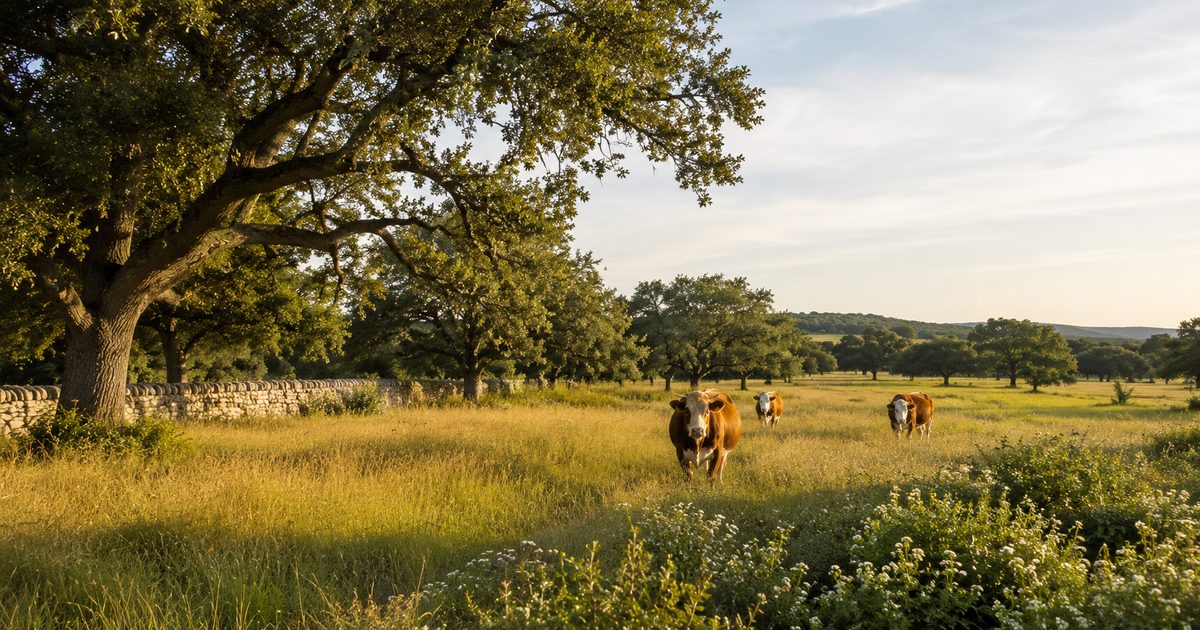
Under agricultural special valuation, the Blanco County Appraisal District values the land based on what it is worth for agricultural production — the capitalized income it would generate from cattle grazing, hay production, or other qualifying uses — rather than what it would sell for on the open market. In Blanco County's land market, where prices have risen substantially over the past decade driven by recreational and lifestyle demand, the gap between market value and agricultural productivity value can be enormous.
A concrete example
A 100-acre tract in Blanco County might sell for $1,000,000 at market value. The Blanco County Appraisal District might appraise the same land for agricultural production purposes at $50,000–$80,000. At a property tax rate of approximately 1.5–2%, the difference between paying taxes on $1,000,000 vs. $65,000 is the difference between a $15,000–$20,000 annual tax bill and a $975–$1,300 annual tax bill. The financial significance of the valuation cannot be overstated.
Property Tax Exemptions — What They Actually Are
Property tax exemptions in Texas are reductions in the taxable value of a property based on specific ownership or use characteristics. Common exemptions include:
- Homestead exemption — reduces appraised value by $100,000 for school district taxes (as of recent legislative changes) plus the cap on annual value increases for primary residences
- Over-65 exemption — additional reduction and school tax freeze for homeowners 65 and older
- Disabled veteran exemptions — tiered reductions based on disability rating, up to full exemption for 100% disabled veterans
- Charitable/religious exemptions — for qualifying nonprofit organizations
These exemptions apply to the tax owed or the taxable value of a property based on the owner's status, not based on how the land is used for production.
Can Both Apply to the Same Property?
Yes. It is common for a rural Blanco County property to have both the homestead exemption applied to the house and a portion of the land (the residential curtilage), and agricultural special valuation applied to the remaining acreage used for cattle, hay, or wildlife management. The two mechanisms are not mutually exclusive and together can produce a very favorable combined tax position.