
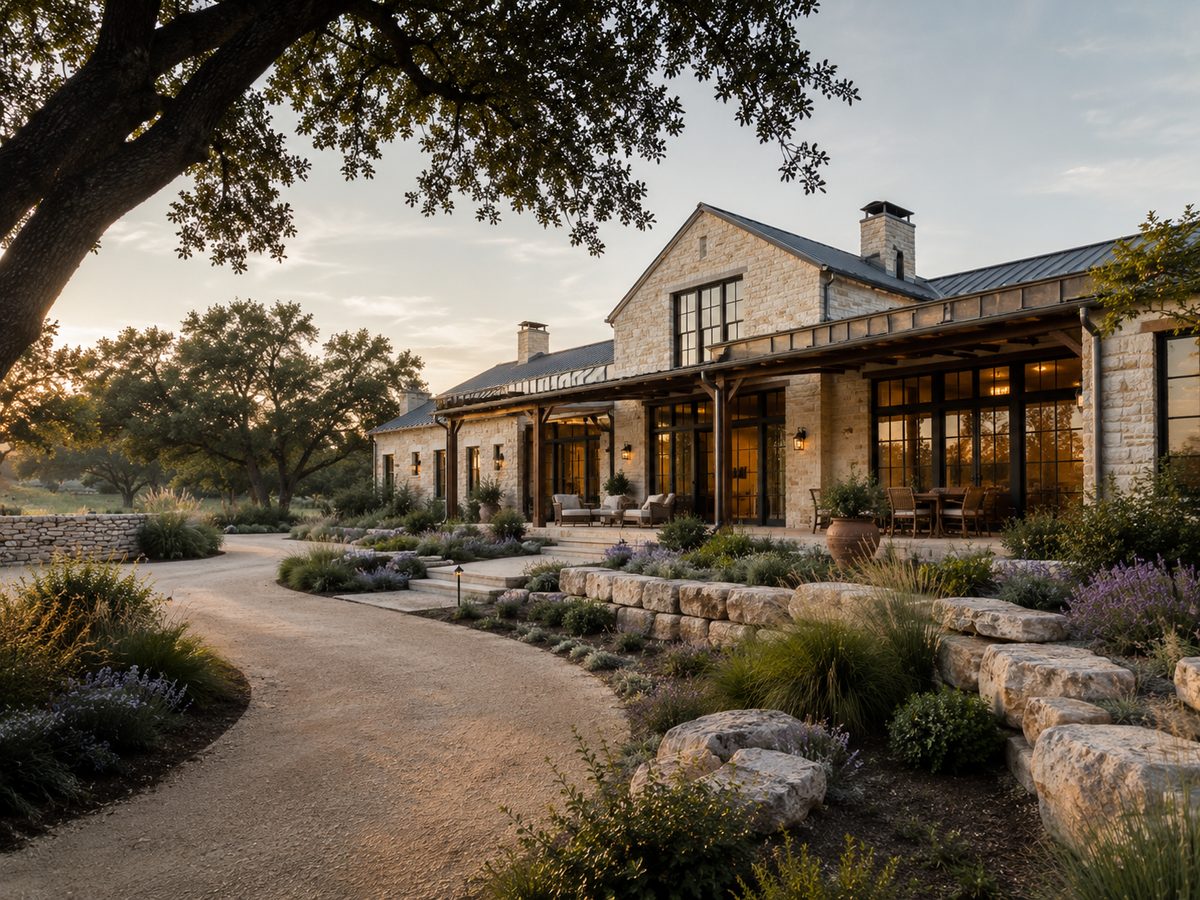
Why Insurance Belongs in Your Due Diligence
Most buyers lining up a rural purchase focus on water, access, and the survey, and treat insurance as a closing-week formality. On rural land it isn't. Whether a carrier will insure the property, what it will exclude, and what it costs can all change the real cost of ownership — and unlike a survey, you can't fix a bad insurance answer after you've closed. Add it to your due diligence checklist and get quotes while you still have an option period.
Insuring a Home on Rural Acreage
A home on acreage is rated on more than its square footage. Carriers look at the distance to the nearest fire station and the area's fire-protection class, the roof and exterior materials, the age of electrical and plumbing, and the surrounding vegetation. A home on a county road served by a volunteer fire department can price very differently from an otherwise identical house inside city limits. Texas premiums run well above the national average — Bankrate has put the Texas average at roughly $3,900 a year against about $2,400 nationally — and rural properties often sit toward the high end, so treat any online estimate as a rough guide and get real quotes for the specific address.
Wildfire Risk in the Hill Country
Wildfire is now a genuine underwriting issue in parts of the Hill Country, particularly on acreage with heavy native cedar (Ashe juniper), live oak, and dry grass. Wildfire damage is generally covered by a standard homeowners policy, but carriers increasingly price it using property-level wildfire scores, and some have declined to renew homes they consider high risk. Locally reported examples in nearby Kendall County describe homeowners being told their policies would not be renewed until the home qualified as a "Wildfire Prepared Home." Defensible space around the structure, ember-resistant construction, and a Class A roof all help keep a home insurable. The Texas Department of Insurance points homeowners to the Texas Wildfire Risk Assessment Portal to check a specific property's exposure, which is worth doing before you make an offer. Clearing brush and cedar around a homesite also lowers risk; see Cedar Clearing: What It Costs and What It's Worth.
Barns, Outbuildings, Fences, and Equipment
This is where a standard homeowners policy often falls short on ranch property. Outbuildings, barns, workshops, and fencing may carry limited coverage or specific exclusions, and tractors, implements, and tools generally need to be scheduled separately. Properties with significant improvements or agricultural use are often better served by a farm-and-ranch policy, which is typically written to cover the house, barns, equipment, and liability together. Ask any carrier exactly how it treats each structure and piece of equipment on the property, and get the answer in writing.
Liability: Hunting Leases, Guests, and Livestock
Owning land creates liability exposure that a house in town doesn't — guests on uneven ground, ponds and creeks, vehicles and equipment, and, if you lease the land, hunters on the property. A lessee's insurance certificate does not replace your own coverage. If you plan to lease for hunting or grazing, confirm with your insurance agent that your policy covers it and consider an umbrella policy for added liability protection. See Hunting Leases on Texas Ranch Land for how leases and additional-insured requirements work.
Flood, Hail, and What a Standard Policy Excludes
Flood is excluded from standard homeowners policies, so a home or improvements near a creek or in a mapped floodplain needs separate flood coverage through the National Flood Insurance Program or a private carrier. Hail and wind are common Texas losses and may carry a separate, higher deductible. Read the declarations page for percentage-based deductibles — a 1% or 2% wind and hail deductible on a large replacement value is a bigger out-of-pocket number than many buyers expect. See Flood Plains on Hill Country Land for how to check a property's flood exposure.
Vacant Land and Land With No House
If you're buying raw acreage with no structure, there's no homeowners policy to buy, but you still have exposure as the landowner. Liability coverage for vacant land is typically available through a landowner or farm-and-ranch liability policy, and it matters most if anyone else will be on the property — leases, family, contractors, or guests. It's inexpensive relative to the exposure it covers.
What to Do Before You Close
- Ask for quotes from at least two carriers, including an independent agent who works with farm-and-ranch and rural carriers.
- Check the property's wildfire exposure with the Texas Wildfire Risk Assessment Portal.
- Confirm the fire station distance and protection class used in the quote.
- Ask how outbuildings, fences, and equipment are covered and what's excluded.
- Price flood coverage separately if the property or improvements are near a creek or floodplain.
- Review wind and hail deductibles, not just the premium.
For the full pre-closing checklist, see The Complete Due Diligence Checklist for Buying Ranch Land in Texas, and for how insurance fits into your overall carrying costs, see Financing Ranch Land in Texas.