Why Hunting Leases Matter for Hill Country Landowners
A hunting lease is one of the few ways raw Texas ranch land generates cash income without running a full agricultural operation. For landowners who don't want to manage cattle or who already qualify for a wildlife management exemption, a lease can turn an otherwise passive asset into real annual revenue — while the land itself continues to appreciate.
It's also one of the more legally exposed things a landowner can do with their property, if it isn't set up correctly. A hunting lease puts armed strangers with vehicles on your land for extended periods. Texas law offers real liability protection to landowners, but that protection comes with specific requirements that too many leases skip.
This guide covers what a lease is actually worth, how to structure one, and where the real risk sits.
What a Hunting Lease Is Worth in 2026
Rates vary meaningfully by county, game quality, management level, and acreage, but current Hill Country market activity generally falls into these bands:
- General-quality land, no specific management: $5–$10 per acre annually
- Managed low-fence whitetail properties: $15–$25 per acre annually
- Premium-county, well-managed ranches (Mason, Llano, Gillespie, and similar counties known for trophy potential): $30–$40+ per acre
- Exotic or multi-species operations: Highly variable, sometimes $20–$100+ per acre depending on species and exclusivity
An 850-acre Hill Country property, for example, might lease for somewhere in the neighborhood of $20,000–$25,000 for a season depending on game quality and exclusivity — figures that track closely with the per-acre ranges above. Smaller acreages with strong deer density and good habitat can command a higher per-acre rate than large, thinly managed tracts, similar to the dynamic seen in raw land pricing.
Exclusivity matters. An exclusive annual lease to a single group typically prices differently — and is simpler to manage — than day-hunt arrangements with multiple parties across a season.
Liability: The Part Landowners Underestimate
Texas Civil Practice and Remedies Code Chapter 75 provides real liability protection to landowners who lease land for recreational purposes, including hunting — but that protection is not automatic or unconditional. It generally applies when the landowner, lessee, or occupant maintains liability coverage at or above specific statutory thresholds.
In practice, this means two things need to happen, not one:
- Require lessee insurance. Every hunting lessee should carry a liability policy — commonly in the $300,000 to $1 million range — naming the landowner as an additional insured. Get the certificate of insurance before anyone sets foot on the property, not after.
- Confirm your own coverage separately. Talk to your own insurance agent and confirm your policy covers recreational or hunting use at the required Chapter 75 threshold. If it doesn't, you may need a hunting-lease rider or a stand-alone policy before the season starts.
What Belongs in the Lease Agreement
A proper Texas hunting lease agreement, ideally drafted or reviewed by an attorney familiar with Chapter 75, should specify:
- The leased acreage and boundaries, tied to a current survey where possible
- Lease term, payment schedule, and renewal terms
- Permitted species, harvest limits, and any management goals (e.g., age or antler restrictions)
- Number of hunters and guests permitted on the property
- Required liability insurance naming the landowner as additional insured
- An indemnification and hold-harmless clause referencing Chapter 75 of the Texas Civil Practice and Remedies Code
- Rules governing vehicle use, camping, fires, and guest access
- A signed individual liability waiver from every hunter and guest — not just the lease-holder
Generic lease templates found online often miss the Chapter 75 language specific to Texas or fail to address individual waivers for every person on the property, not just the primary lessee. This is worth the cost of an attorney's review, especially for a first lease.
How a Lease Interacts With Your Ag or Wildlife Exemption
A hunting lease and an agricultural or wildlife management exemption are legally separate things, and landowners sometimes conflate them. Leasing land for hunting does not, by itself, create or remove an exemption.
Where they intersect is on properties using or converting to a wildlife management exemption. That exemption is based on documented habitat management practices — habitat control, supplemental water, supplemental food, predator management, census counts, and similar activities — not on whether hunting occurs. A property can maintain a wildlife exemption with zero hunting activity, and a property can be actively leased for hunting while still qualifying under an agricultural exemption tied to livestock or another qualifying use entirely.
What a hunting operation often does provide is useful documentation — trail camera census data, habitat improvement records — that can support a wildlife management plan if you're pursuing that exemption path. But confirm your specific situation with your county appraisal district before assuming a lease changes anything about your exemption status.
Exclusive Lease vs. Day Hunts vs. Outfitted Operations
Landowners generally choose between three models:
Exclusive Annual Lease
One group leases the entire property for the season. Simplest to manage: one lease, one insurance certificate, one point of contact. Lower revenue per acre in premium counties compared to day-hunt models, but dramatically less landowner involvement.
Day Hunts
Multiple parties hunt for single days or short stays across the season, typically at a per-hunter or per-day rate. Can generate more total revenue on well-managed, high-game-density land, but requires individual waivers and insurance verification for every party, and significantly more landowner coordination.
Outfitted Operations
A professional outfitter manages bookings, guides, and guest relations, paying the landowner a negotiated rate or share of revenue. Highest revenue potential on premium properties, but requires a relationship with a reputable, properly licensed and insured outfitter — and due diligence on that outfitter's own insurance and track record.
For a landowner without ranch staff on-site, an exclusive lease is usually the lower-friction starting point, with the option to explore day-hunt or outfitted models once the property's game management is established.
Does a Hunting Operation Affect Resale Value?
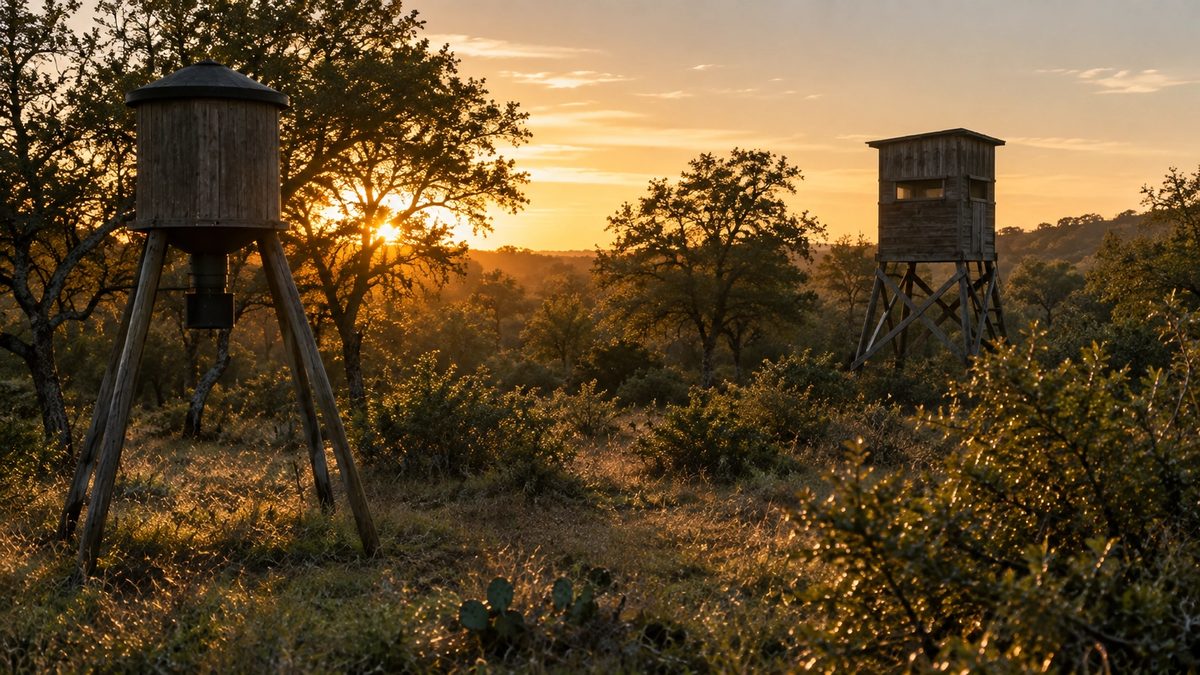
An established, well-documented hunting operation — with feeders, stands, blinds, food plots, road access to hunting areas, and a track record of lease income or trophy quality — can be a genuine asset when the property eventually sells. Buyers purchasing Hill Country land specifically for recreational use will factor in existing infrastructure and demonstrated game quality, even though it isn't typically broken out as a separate line-item value the way water rights or an exemption might be. It supports the property's overall positioning in the recreational land market covered in our guide to ranch land pricing per acre.